

As a seasoned supplier of Box Type Substations, I understand the critical importance of preventing electrostatic discharge (ESD) within these facilities. Electrostatic discharge can cause significant damage to electrical equipment, disrupt power supply, and even pose safety risks to personnel. In this blog post, I will discuss several effective measures to prevent electrostatic discharge in a box type substation.
Understanding Electrostatic Discharge in Box Type Substations
Before delving into prevention measures, it's essential to understand how electrostatic discharge occurs in box type substations. Electrostatic charge can build up on the surfaces of equipment, conductors, and even the enclosure itself due to various factors such as friction, induction, or contact with charged objects. When the electrostatic potential reaches a certain level, a sudden discharge can occur, releasing a large amount of energy in a short period. This discharge can damage sensitive electronic components, cause insulation breakdown, and lead to electrical faults.
Grounding and Bonding
One of the most fundamental and effective measures to prevent electrostatic discharge is proper grounding and bonding. Grounding provides a low - resistance path for electrostatic charges to flow safely into the earth, preventing the build - up of excessive potential. In a box type substation, all electrical equipment, enclosures, and metal structures should be connected to a common grounding system.
The grounding system should have a low resistance value, typically less than 10 ohms, to ensure efficient dissipation of electrostatic charges. Copper conductors are commonly used for grounding due to their high conductivity. Bonding, on the other hand, involves connecting all metallic parts within the substation together to equalize the electrical potential. This helps to prevent potential differences between different parts, which could lead to electrostatic discharge. For example, the metal frames of transformers, switchgear, and control panels should be bonded to the grounding system.
Humidity Control
Maintaining an appropriate level of humidity within the box type substation can significantly reduce the risk of electrostatic discharge. In dry environments, the air has a low conductivity, which allows electrostatic charges to accumulate more easily on surfaces. By increasing the humidity to a range of 40% - 60%, the conductivity of the air is improved, and electrostatic charges are more likely to dissipate naturally.
Humidifiers can be installed in the substation to control the humidity level. However, it's important to ensure that the humidity does not become too high, as this can lead to issues such as corrosion of electrical components and condensation on surfaces. Regular monitoring of the humidity level is essential to maintain it within the optimal range.
Anti - Static Materials
Using anti - static materials in the construction and operation of the box type substation can also help prevent electrostatic discharge. Anti - static materials have properties that reduce the generation and accumulation of electrostatic charges. For example, anti - static coatings can be applied to the interior surfaces of the substation enclosure, as well as on equipment and cables.

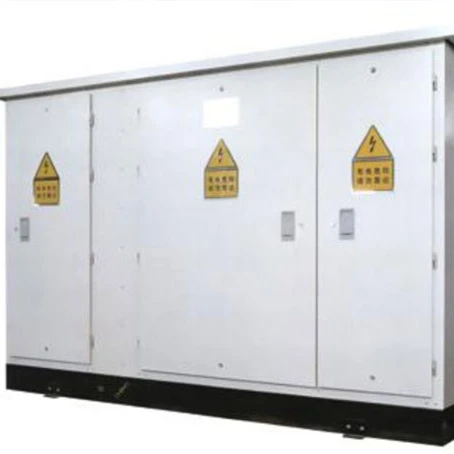
These coatings contain conductive particles that help to dissipate electrostatic charges. Additionally, anti - static mats can be placed on the floors of the control rooms and areas where personnel work. These mats provide a conductive surface that allows electrostatic charges from the body to be safely discharged.
Personnel Training
Proper training of personnel working in the box type substation is crucial for preventing electrostatic discharge. Workers should be educated about the risks associated with ESD and the importance of following ESD prevention procedures.
This includes wearing anti - static clothing and wrist straps when handling sensitive electronic components. Anti - static clothing is made from special fabrics that have a low electrostatic charge generation, while wrist straps are connected to the grounding system to ensure that any static charges on the body are safely discharged. Personnel should also be trained on how to handle and store electronic components properly to avoid generating static charges.
Equipment Selection and Installation
When selecting equipment for the box type substation, it's important to choose components that are designed to be resistant to electrostatic discharge. For example, electronic devices such as microcontrollers, sensors, and communication modules should have built - in ESD protection features.
During the installation process, care should be taken to ensure that all equipment is properly installed and connected. Incorrect installation, such as loose connections or improper grounding, can increase the risk of electrostatic discharge. Cable management is also important, as tangled or poorly routed cables can generate static charges through friction.
Maintenance and Inspection
Regular maintenance and inspection of the box type substation are essential for ensuring the effectiveness of ESD prevention measures. The grounding system should be regularly tested to ensure that its resistance remains within the acceptable range. Any damage or corrosion to the grounding conductors should be repaired immediately.
The anti - static coatings and mats should also be inspected for wear and tear, and replaced if necessary. Humidity - control equipment should be maintained to ensure proper operation. Additionally, all electrical equipment should be inspected for signs of electrostatic damage, and any faulty components should be replaced.
Conclusion
Preventing electrostatic discharge in a box type substation is a multi - faceted approach that requires a combination of proper grounding and bonding, humidity control, the use of anti - static materials, personnel training, appropriate equipment selection and installation, and regular maintenance and inspection.
As a box type substation supplier, we offer a range of high - quality products, including Intelligent Prefabricated Substation, Mobile Packaged Electrical Distribution Transformer Substation, and Compact Transformer Substation, all of which are designed with ESD prevention in mind.
If you are in the market for a box type substation or looking to improve the ESD protection of your existing substation, I encourage you to contact us for further information and to discuss your specific requirements. Our team of experts is ready to provide you with the best solutions to meet your needs.
References
- [Electrical Safety Standards for Substations, IEEE Std C37.20.2 - 2018]
- [Handbook of Electrostatic Discharge Protection, Second Edition, By EMC Technology]
- [National Electrical Code (NEC) for grounding and bonding requirements]