

A cable fault location system is an essential tool for maintaining the integrity and reliability of twisted - pair cables, which are widely used in various communication and networking applications. As a supplier of Cable Fault Location System, I am often asked about the mechanisms behind how these systems locate faults in twisted - pair cables. In the following blog, I will delve into the details of this process.
Understanding Twisted - Pair Cables
Before we explore how a cable fault location system works, it is necessary to understand the structure of twisted - pair cables. A twisted - pair cable consists of two insulated copper wires that are twisted together. The twisting helps to reduce electromagnetic interference (EMI) and crosstalk between adjacent pairs of wires. These cables are commonly used in telephone systems, Ethernet networks, and other data communication applications. However, they are also susceptible to faults such as open circuits, short circuits, and impedance mismatches, which can disrupt the flow of data and cause communication failures.
Basic Principles of Cable Fault Location
The basic principle behind cable fault location is to send a signal into the cable and analyze the reflections or changes in the signal caused by the fault. There are several techniques used to achieve this, and different cable fault location systems may use one or more of these techniques depending on the nature of the fault and the requirements of the application.
Time - Domain Reflectometry (TDR)
TDR is one of the most commonly used techniques for cable fault location. It works by sending a short electrical pulse into the cable and measuring the time it takes for the reflection of the pulse to return to the sending end. When the pulse encounters a fault, such as an open circuit or a short circuit, a portion of the pulse is reflected back towards the source. The time delay between the transmission of the pulse and the reception of the reflection is directly proportional to the distance between the fault and the measuring point.
[d=\frac{v\times t}{2}]
where (d) is the distance to the fault, (v) is the velocity of propagation of the signal in the cable, and (t) is the time delay between the transmitted and reflected pulses. The velocity of propagation is a characteristic of the cable and is typically expressed as a percentage of the speed of light in a vacuum.
TDR can also be used to detect impedance mismatches in the cable. An impedance mismatch occurs when the characteristic impedance of the cable changes at a certain point, which can cause a partial reflection of the signal. By analyzing the amplitude and shape of the reflected pulse, the nature and location of the impedance mismatch can be determined.
Frequency - Domain Reflectometry (FDR)
FDR is another technique for cable fault location. Instead of sending a single pulse, FDR sends a continuous range of frequencies into the cable. The reflected signals at different frequencies are measured and analyzed to determine the location and nature of the fault.

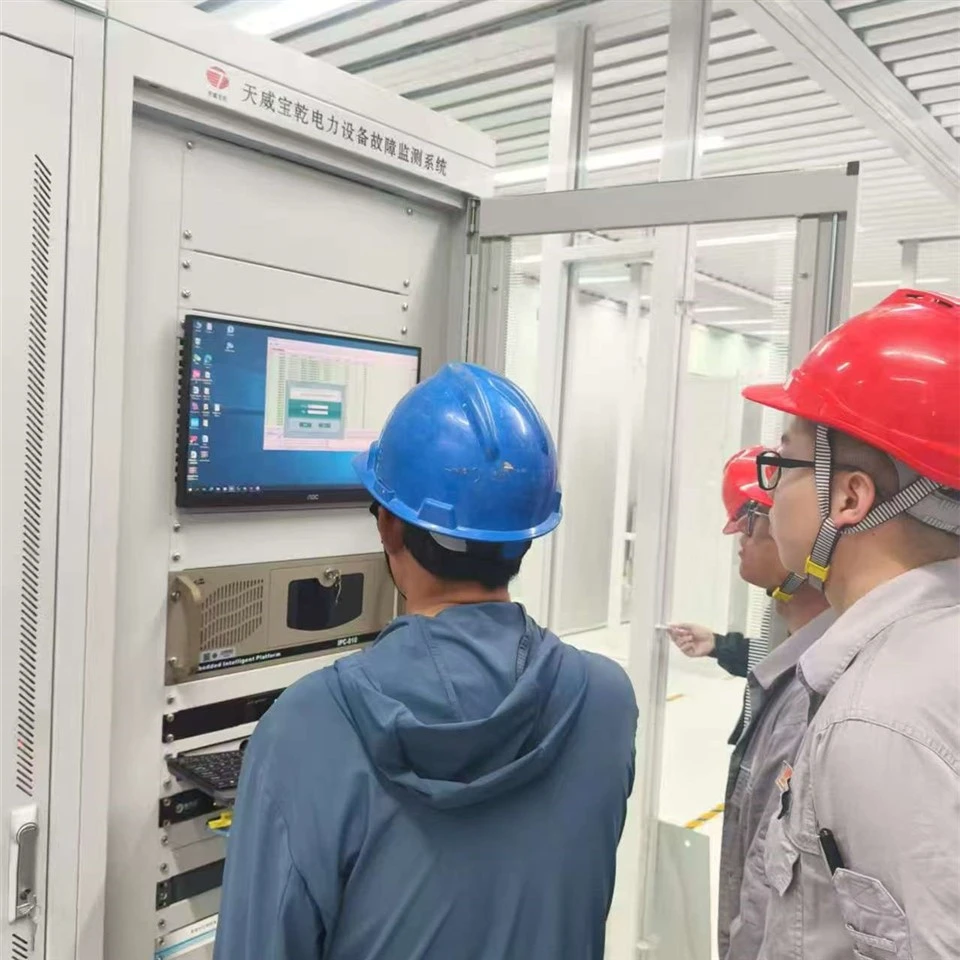
FDR is particularly useful for detecting faults in cables with complex impedance characteristics, such as those with multiple branches or splices. It can also provide more detailed information about the nature of the fault, such as the type of impedance change and the extent of the damage.
Advanced Techniques in Cable Fault Location
In addition to TDR and FDR, there are other advanced techniques used in modern cable fault location systems to improve the accuracy and reliability of fault detection.
Arc Reflection Method
The arc reflection method is used to locate intermittent faults in cables, such as faults caused by insulation breakdown under high - voltage conditions. When a high - voltage pulse is applied to the cable, an arc may be formed at the fault location. The reflection of the pulse from the arc can be used to determine the location of the fault.
This method is particularly effective for detecting hard - to - find faults that may not be detectable using traditional TDR or FDR methods. However, it requires specialized equipment to generate and measure the high - voltage pulses.
Partial Discharge Detection
Partial discharges are small electrical discharges that occur within the insulation of a cable when the electrical stress exceeds the dielectric strength of the insulation material. These discharges can cause progressive damage to the insulation and eventually lead to a cable fault.
A Cable Partial Discharge Online Monitoring System can detect and locate partial discharges in real - time, providing early warning of potential cable faults. By analyzing the characteristics of the partial discharge signals, such as the frequency, amplitude, and phase, the location and severity of the fault can be determined.
Role of Cable Online Monitoring Systems
A Cable Online Monitoring System plays a crucial role in cable fault location. These systems continuously monitor the electrical parameters of the cable, such as voltage, current, and temperature, and can detect any abnormal changes that may indicate the presence of a fault.
By using a combination of online monitoring and fault location techniques, it is possible to quickly identify and locate faults in twisted - pair cables, reducing downtime and maintenance costs. For example, if an online monitoring system detects an abnormal increase in temperature or a change in the electrical impedance of the cable, a cable fault location system can be used to pinpoint the exact location of the fault.
Our Cable Fault Location System
As a professional supplier of cable fault location systems, we offer a range of high - quality products that are designed to meet the diverse needs of our customers. Our systems are equipped with advanced technology and features, such as high - precision TDR and FDR capabilities, multiple measurement modes, and user - friendly interfaces.
Our systems are suitable for use in various applications, including telecommunications, data centers, industrial automation, and power distribution. We also provide comprehensive technical support and training services to ensure that our customers can effectively use our products to locate and diagnose cable faults.
Contact Us for Purchase and Negotiation
If you are in need of a reliable cable fault location system, we encourage you to contact us for purchase negotiation. Our team of experts is ready to assist you in selecting the most suitable system for your specific requirements and providing you with the best possible solutions.
References
- "Cable Fault Location Handbook" - This handbook provides in - depth information on various cable fault location techniques and methods.
- "Twisted - Pair Cable Technology" - A technical guide that discusses the structure, properties, and applications of twisted - pair cables.
- "Advanced Electrical Cable Testing and Monitoring" - A reference book that covers the latest technologies in cable testing and monitoring, including partial discharge detection and online monitoring systems.